
Philips Voice Tracer Manual: A Comprehensive Guide
This manual provides detailed instructions for Philips VoiceTracer devices, covering setup, recording, file management, and troubleshooting. It’s designed for optimal audio capture!
Philips VoiceTracer devices are engineered for capturing audio in diverse scenarios – from spontaneous thoughts and vital meeting notes to lectures, interviews, and even musical ideas. These digital voice recorders boast exceptional audio quality, thanks to their advanced microphone technology. They are ideal for professionals, students, and anyone needing reliable voice recording.
The range offers user-friendly operation alongside features like voice activation and index marking, streamlining workflow. Philips prioritizes portability and ease of use, making these recorders indispensable tools for modern life.
Understanding Voice Tracer Models
Philips offers a diverse range of VoiceTracer models, each catering to specific needs. Popular options include the DVT1250, known for its simplicity, and the DVT2075, featuring enhanced microphone sensitivity. The DVT3100 and DVT4110 provide advanced features like voice activation.
The Model 660 stands out with its compact design and 1GB of storage. Understanding these distinctions helps users select the perfect device for their recording requirements and budget.
Popular Models: DVT1250, DVT2075, DVT3100, DVT4110
The DVT1250 is a reliable entry-level recorder, ideal for basic note-taking. Stepping up, the DVT2075 boasts dual microphones for superior audio quality. The DVT3100 introduces voice activation, streamlining recording. Finally, the DVT4110 offers extended features and improved usability.
Each model supports MP3 and PCM formats, ensuring compatibility and flexibility. Choosing depends on desired features and recording environments.
Model 660 and its Features

The Philips VoiceTracer 660 is a digital voice recorder offering 1GB of internal memory. It excels in capturing spontaneous ideas, meetings, and lectures with clarity. Key features include a sleek design, intuitive controls, and straightforward file management.
This model prioritizes ease of use, making it perfect for beginners. It supports MP3 recording and playback, ensuring broad compatibility. The included premium case adds portability and protection.
Getting Started: Initial Setup
To begin with your Philips VoiceTracer, ensure it’s adequately charged using the provided USB cable. Power on the device by pressing and holding the power button. Familiarize yourself with the navigation buttons for easy file access and settings adjustments.
Initial setup involves setting the correct date and time for accurate file timestamping. This ensures organized recordings. Refer to the device’s menu to locate and adjust these settings for optimal functionality.
Powering On and Basic Navigation
To power on your Philips VoiceTracer, press and hold the designated power button until the screen illuminates. Basic navigation utilizes the directional buttons to scroll through menus and files. The ‘Select’ or ‘OK’ button confirms choices;
Use the ‘Menu’ button to access primary settings like recording quality and file management. The playback controls allow you to easily review your recordings. Practice navigating to become familiar with the interface.
Setting Date and Time
Accurate date and time stamping is crucial for organized recordings. Access the settings menu using the navigation buttons on your Philips VoiceTracer. Locate the ‘Date & Time’ option and select it. Use the directional keys to adjust the year, month, day, hour, and minute.
Confirm each setting with the ‘Select’ or ‘OK’ button. Ensure the correct format is chosen (MM/DD/YYYY or DD/MM/YYYY) for proper file organization and retrieval.
Recording Audio
Initiate recording by pressing the dedicated ‘Record’ button on your Philips VoiceTracer. The device features built-in stereo microphones for capturing clear audio. Position the recorder appropriately for optimal sound pickup, minimizing background noise. Experiment with microphone placement for best results.
Consider utilizing the voice activation feature to conserve memory and battery life, automatically starting and stopping recording based on sound detection.
Using the Built-in Microphones
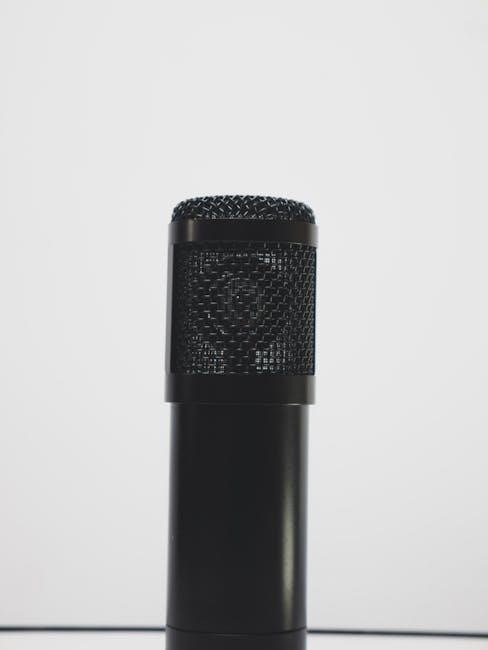
Philips VoiceTracer devices boast dual high-sensitivity stereo microphones, designed for exceptional audio recording in diverse environments. These microphones effectively capture sound from multiple directions, enhancing clarity. For optimal results, position the device approximately 6-8 inches from the sound source.

Minimize handling noise during recording by using a stable surface or the included accessories. Experiment with microphone direction to reduce unwanted background sounds.
Adjusting Recording Quality (MP3 vs. PCM)
Philips VoiceTracer recorders offer two primary recording formats: MP3 and PCM. MP3 provides compressed audio, resulting in smaller file sizes – ideal for extended recording times and easy sharing. PCM delivers uncompressed, high-fidelity audio, perfect for critical recordings where quality is paramount.
Select the appropriate format via the device’s settings menu, balancing storage needs against desired audio fidelity. Consider PCM for interviews or music, and MP3 for lectures or notes.
Playback and File Management
Philips VoiceTracer devices feature intuitive file management. Navigate recorded files using the device’s controls, easily locating recordings by date, time, or index marks. Playback is straightforward, with adjustable speed options for clarity.
Protect important files from accidental deletion, and efficiently remove unwanted recordings. Utilize folder creation for organized storage, streamlining your workflow. The device’s interface simplifies managing your audio library.
Navigating Recorded Files
Philips VoiceTracer recorders allow easy access to your audio. Use the device’s navigation buttons to scroll through a list of recordings, often sorted by date and time. Index marks, if added during recording, provide quick jumps to specific points within a file.
The display shows file names and durations, aiding identification. Some models offer search functionality, enabling you to find recordings based on keywords or dates. Efficiently locate and review your captured audio.
Deleting and Protecting Files
Philips VoiceTracer devices offer options to manage your recordings. To delete files, select them using the navigation buttons and choose the delete function – confirm to permanently remove them. Protecting files prevents accidental deletion, ensuring important recordings remain safe.

Access the protection feature through the file menu; protected files are usually indicated by an icon. Regularly review and delete unwanted files to free up storage space on your device.
Connecting to a Computer
Connecting your Philips VoiceTracer to a computer enables file transfer and management. Utilize the included USB cable to establish a connection; the device will typically appear as a removable drive. Alternatively, explore the Philips VoiceTracer App for seamless synchronization on iOS and Android.
The app simplifies transferring recordings and managing device settings. Ensure you have the latest version of the app installed for optimal compatibility and functionality.

USB Connection and File Transfer
Establishing a USB connection is straightforward: plug your Philips VoiceTracer into a computer using the provided cable. The device should automatically mount as a removable disk, allowing drag-and-drop file transfer. Locate your recordings within the designated folders.
Ensure safe ejection of the device after transfer to prevent data corruption. Regularly back up your audio files to avoid potential loss. This method provides a reliable way to archive and share recordings.
Using the Philips VoiceTracer App (iOS & Android)
The Philips VoiceTracer App enhances device functionality, enabling wireless file transfer and remote control. Download it from the Google Play Store or Apple App Store. Connect your VoiceTracer via Bluetooth, following the in-app instructions for pairing.
The app allows for easy organization, playback, and sharing of recordings directly from your smartphone. It streamlines workflow and provides convenient access to your audio files on the go.
Advanced Features
Philips VoiceTracer devices offer features beyond basic recording. Voice Activation Recording starts and stops automatically, saving storage space and simplifying file management. Index Marking allows you to tag important moments during recording for quick navigation during playback.
These tools enhance productivity, making it easier to locate and review key information within lengthy audio files, ideal for lectures, meetings, or interviews.
Voice Activation Recording
Voice Activation Recording (VAR) is a power-saving feature that automatically begins recording when sound is detected and pauses when silence prevails. This intelligent function conserves memory and simplifies file management by eliminating unnecessary audio.

VAR is perfect for capturing intermittent conversations or lectures, ensuring only relevant audio is saved, streamlining your workflow and reducing post-recording editing time.
Index Marking for Easy Navigation
Index Marking allows you to tag specific points during recording, creating bookmarks for quick access later. This feature is invaluable for lengthy recordings like meetings or lectures, enabling effortless navigation to key moments.
Simply press the designated index button at crucial points, and the VoiceTracer will create a marker. During playback, you can easily jump between these indexed sections, saving significant time and improving efficiency.
Troubleshooting Common Issues
Encountering problems? This section addresses frequent issues. If your device won’t power on, ensure it’s adequately charged and try a different USB cable. For poor audio quality, check microphone settings and recording format (MP3 or PCM).
Verify the microphones aren’t obstructed. If issues persist, consult the official Philips support website or online forums for further assistance and potential firmware updates.
No Power/Device Won’t Turn On
If your Philips VoiceTracer fails to power on, first confirm it has sufficient charge by connecting it to a power source with a known-good USB cable; Try a different USB port or adapter. If it still doesn’t respond, perform a hard reset (refer to the full manual).
A completely depleted battery may take time to show a charging indicator. Contact Philips support if the problem continues.
Poor Audio Quality
Experiencing muffled or distorted audio? Ensure the microphones aren’t obstructed. Adjust recording quality settings – PCM offers superior fidelity but larger file sizes, while MP3 balances quality and storage. Check the microphone sensitivity settings within the device menu.
Reduce background noise during recording. If using headphones, verify they are properly connected and functioning correctly. A firmware update might also resolve audio issues.
Understanding File Formats
Philips VoiceTracer devices support both MP3 and PCM formats. MP3 offers compressed audio, ideal for longer recordings and efficient storage, though with some quality loss. PCM (Pulse Code Modulation) delivers uncompressed, high-fidelity audio, perfect for critical recordings where clarity is paramount.
Choosing the right format depends on your needs; PCM creates larger files, while MP3 provides a balance between size and sound quality.
MP3 Format Details
MP3 is a widely compatible compressed audio format utilized by Philips VoiceTracer recorders. It significantly reduces file size, enabling extended recording times and easier storage. The compression process does result in some audio data loss, but it’s often imperceptible for speech recording.
Bitrate settings influence MP3 quality; higher bitrates yield better sound but larger files. It’s a practical choice for general dictation and note-taking.
PCM Format Details
PCM (Pulse Code Modulation) is an uncompressed audio format offered on Philips VoiceTracer devices. Unlike MP3, PCM preserves all original audio data, resulting in superior sound quality and fidelity. However, this comes at the cost of significantly larger file sizes, limiting recording duration.
PCM is ideal when pristine audio quality is paramount, such as recording music or critical interviews where detail matters.
Battery Management
Philips VoiceTracer devices utilize rechargeable batteries for portability. To maximize battery life, avoid extreme temperatures and fully discharge the device periodically before recharging. Utilize the included USB cable and a standard USB port for charging.
Battery life varies based on usage, recording quality (MP3 vs. PCM), and features like voice activation. Regularly check the battery indicator to prevent unexpected power loss during important recordings.
Charging the Device
To charge your Philips VoiceTracer, connect it to a computer or USB power adapter using the provided USB cable. A full charge typically takes several hours, indicated by a charging LED. Avoid using damaged cables or power sources.
It’s recommended to fully charge the device before initial use and periodically to maintain optimal performance. Do not interrupt the charging process until complete for best battery health.
Battery Life Optimization
Maximize your Philips VoiceTracer’s battery life by adjusting recording settings. Using MP3 format consumes less power than PCM. Disable features like voice activation when not needed. Reduce screen brightness and shorten the auto-power-off timer.
Avoid extreme temperatures, as they can degrade battery performance. When storing the device for extended periods, charge it to around 50% to preserve battery health.
Using with SpeechMike Premium
Integrating the Philips SpeechMike Premium significantly enhances dictation workflows. Connect the SpeechMike via USB to your computer and the VoiceTracer. Utilize specialized software for seamless voice-to-text conversion, boosting productivity.
The SpeechMike’s ergonomic design and noise cancellation deliver superior audio quality. Configure settings within the Philips software for personalized voice profiles and command customization, optimizing speech recognition accuracy.
Integrating SpeechMike for Dictation
Seamlessly connect your Philips SpeechMike Premium to a computer alongside your VoiceTracer for superior dictation. Install the Philips SpeechControl software and configure the SpeechMike as the primary input device.
This integration allows for direct voice-to-text conversion, streamlining documentation processes. Customize voice profiles and commands within the software to enhance accuracy and personalize your workflow. Enjoy faster, more efficient dictation with this powerful combination!
Firmware Updates
Regularly check for firmware updates on the Philips official website to ensure optimal performance and access to the latest features. Connect your VoiceTracer to a computer via USB and utilize the Philips Device Manager software.
Follow the on-screen instructions carefully during the update process; interruption can cause device malfunction. Updated firmware often includes bug fixes, improved compatibility, and enhanced audio quality, maximizing your VoiceTracer’s capabilities.
Checking for and Installing Updates
To check for updates, connect your VoiceTracer to a computer and open the Philips Device Manager. The software will automatically scan for available firmware versions. If an update is found, carefully follow the on-screen prompts to begin the installation process.
Ensure a stable USB connection throughout the update. Do not interrupt the process, as this could damage the device. Successful updates enhance performance, fix bugs, and add new functionalities.
Accessories and Compatibility
Philips offers a range of accessories to enhance your VoiceTracer experience, including premium cases and carrying pouches for protection during travel. Compatibility extends to various headphones, ensuring optimal audio playback quality.
The SpeechMike Premium integrates seamlessly for professional dictation. Check the Philips website for a complete list of compatible accessories and ensure they meet your specific model’s requirements for best performance.
Premium Cases and Carrying Pouches
Philips provides durable, premium cases and carrying pouches specifically designed for VoiceTracer models. These accessories offer robust protection against impacts, dust, and moisture, ideal for on-the-go recording.
They ensure your device remains safe during travel or storage, extending its lifespan. Look for cases with secure closures and padded interiors for maximum safeguarding of your valuable recordings and the device itself.
Headphone Compatibility
Philips VoiceTracer devices generally support standard 3.5mm headphone jacks, offering broad compatibility with various headphone brands and styles. Using headphones allows for private playback and monitoring during recording.
Ensure your headphones have a compatible plug. While most work seamlessly, some specialized or Bluetooth headphones may require an adapter. Check your device’s specifications for optimal audio performance and compatibility details.
Where to Find Support and Manuals
Philips offers extensive support resources on their official website, including downloadable manuals, FAQs, and troubleshooting guides for all VoiceTracer models. You can easily find information tailored to your specific device.
Additionally, numerous online forums and communities dedicated to Philips products provide a platform for users to share tips, solutions, and experiences. These resources can be invaluable for resolving issues and maximizing your device’s potential.
Philips Official Website Resources
Philips’ dedicated support section provides a wealth of resources for VoiceTracer users. You’ll find comprehensive user manuals available for download in multiple languages, covering all features and functionalities. Detailed FAQs address common questions and issues, offering quick solutions.
Furthermore, the website offers software downloads, including the Philips VoiceTracer App, and access to customer support via online chat or email for personalized assistance with your device.
Online Forums and Communities
Philips VoiceTracer users often share experiences and solutions on various online forums and communities. These platforms offer a space to ask questions, troubleshoot issues, and learn tips and tricks from fellow enthusiasts. Dedicated threads discuss specific models like the DVT1250 and DVT4110.
Searching online can reveal valuable insights and workarounds not always found in official documentation, fostering a collaborative support network for VoiceTracer owners.