
Bill Mollison’s seminal work, a comprehensive guide, unveils permaculture’s principles, offering a user-friendly exploration of its features and diverse functionalities․
This manual, designed for seamless navigation, empowers users to delve into the intricacies of implementing sustainable systems, compatible with varied landscapes․
Historical Context of the Manual’s Creation
Bill Mollison’s Permaculture: A Designers’ Manual didn’t emerge in a vacuum; it was the culmination of years of observation, experimentation, and a growing dissatisfaction with conventional agricultural practices․ The late 1970s saw increasing awareness of the environmental damage caused by industrial farming, prompting a search for more sustainable alternatives․
Mollison, alongside David Holmgren, initially coined the term “permaculture” in the early 1970s, born from observations of stable, productive ecosystems․ However, the need for a codified system, a practical guide for designers, became apparent․ The manual, first published in 1988, represented a monumental effort to synthesize this knowledge․
It wasn’t simply a theoretical treatise; it was a direct response to the need for accessible, hands-on instruction․ The manual aimed to empower individuals to design their own resilient systems, moving beyond dependence on external inputs․ Its creation coincided with a burgeoning interest in ecological design and self-sufficiency, making it a pivotal text in the permaculture movement’s growth and global spread․ The guide facilitates navigation for users․
Bill Mollison’s Core Philosophy & Influences
Bill Mollison’s core philosophy, deeply embedded within Permaculture: A Designers’ Manual, centers on working with nature, rather than against it․ He advocated for observing natural patterns and mimicking them in human-designed systems․ This approach stemmed from a rejection of industrial agriculture’s reliance on fossil fuels and chemical inputs․
His influences were diverse, ranging from indigenous farming practices – particularly those of Pacific Islanders – to the work of Masanobu Fukuoka, a Japanese farmer and philosopher promoting “natural farming․” Mollison also drew heavily from ecology, botany, and hydrology, integrating these disciplines into a holistic design framework․
A key tenet was ethical responsibility: care for the earth, care for people, and fair share․ The manual reflects this, emphasizing resource efficiency, resilience, and the creation of systems that benefit both humans and the environment․ It’s a guide for functionality and features, empowering users․

Key Concepts in Permaculture Design
Mollison’s manual expertly details core concepts, enabling users to navigate features and functionality for sustainable system creation, emphasizing observation and thoughtful integration․

Zone Planning & Its Application
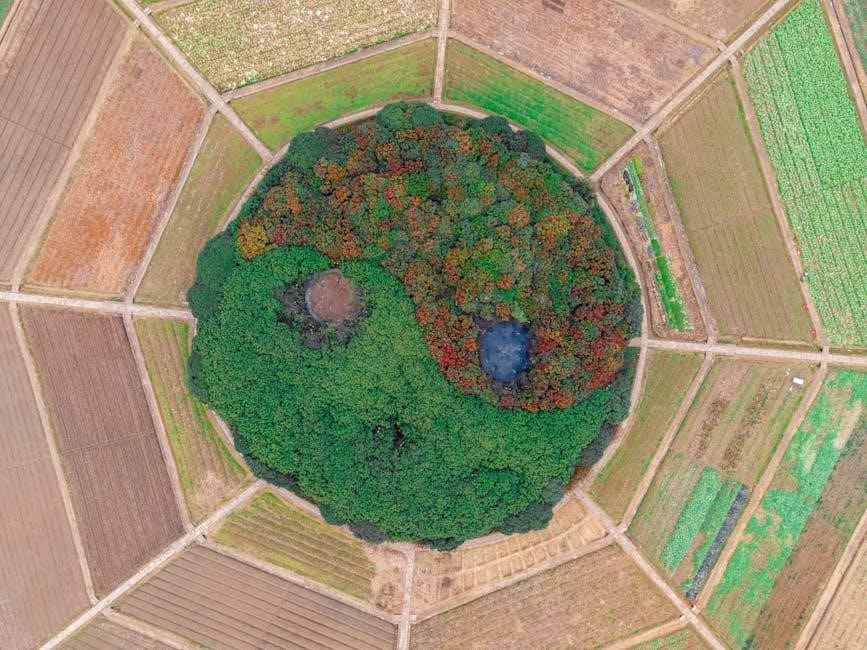
Zone planning, a cornerstone of Bill Mollison’s design methodology, meticulously organizes elements based on frequency of use and required intensity of management․ The manual elucidates a system of concentric zones, radiating from the home – Zone 0 – representing the core of human activity․
Zone 1, immediately surrounding the house, is dedicated to frequently visited elements like herb gardens and kitchen gardens, demanding daily attention․ Zone 2 encompasses areas needing less frequent attention, such as poultry or berry bushes․ Zones 3, 4, and 5 progressively represent wilder, less managed areas, transitioning into semi-wild and ultimately, wild landscapes․
This strategic placement minimizes effort and maximizes yields, aligning resource allocation with need․ The manual stresses that zone boundaries aren’t rigid, but rather guidelines adaptable to specific site conditions and user lifestyles․ Effective zone planning, as detailed by Mollison, fosters a harmonious relationship between humans and the environment, optimizing efficiency and resilience within the designed system․
Sector Analysis: Understanding Energy Flows
Sector analysis, as presented in Bill Mollison’s manual, is a crucial step in permaculture design, focusing on external energies impacting a site․ It involves mapping the flows of wind, sun, water, fire risk, and animal pathways, recognizing them as dynamic forces shaping the landscape․
The manual emphasizes visualizing these energies as ‘sectors’ entering the site, influencing element placement and design choices․ For example, prevailing winds dictate windbreak locations, while solar aspect informs building orientation and plant selection․ Understanding these flows allows designers to harness beneficial energies and mitigate harmful ones․
Mollison advocates for detailed observation and mapping of these sectors throughout the year, acknowledging seasonal variations․ Effective sector analysis, according to the manual, isn’t about blocking energies, but intelligently working with them, creating resilient and productive systems that thrive within their environmental context․
The Importance of Edge Effect
Bill Mollison’s Permaculture: A Designer’s Manual profoundly highlights the “edge effect” – the dramatically increased diversity and productivity found at the intersection of different ecosystems․ This principle asserts that the boundaries between environments are often the most valuable zones․
The manual explains that edges, like the shoreline between land and water, or the transition from forest to field, experience a greater influx of energy and resources․ This fosters a richer variety of habitats and supports a higher concentration of life․ Designers are encouraged to maximize edge creation within their systems․
Techniques like keyline design, swales, and forest layering are presented as methods to intentionally increase edge․ By strategically creating these interfaces, permaculture systems can yield significantly greater outputs and resilience, mirroring the abundance found in natural ecosystems, as detailed within the manual’s comprehensive approach;

Practical Applications of Permaculture Principles
Mollison’s manual expertly translates theoretical concepts into tangible strategies, demonstrating how to build resilient, self-sustaining systems for diverse environments and user needs․
Water Management Techniques Detailed in the Manual
Bill Mollison’s Permaculture: A Designer’s Manual dedicates significant attention to water management, recognizing its central role in creating productive and resilient landscapes․ The manual details a spectrum of techniques, moving beyond conventional approaches to emphasize capturing, storing, and utilizing water efficiently․
Key strategies include swales – on-contour ditches designed to slow and infiltrate rainwater, recharging groundwater supplies and reducing runoff․ Keyline design, also covered extensively, shapes the land to optimize water distribution․ The manual also explores the construction of ponds and dams, not merely for storage, but as integrated ecosystem components․
Furthermore, greywater systems for reusing household water and techniques for maximizing rainwater harvesting are thoroughly explained․ Mollison stresses observing natural water flows and mimicking these patterns in design, creating systems that work with nature, rather than against it, ensuring long-term water security and abundance․
Soil Building & Fertility Strategies
Bill Mollison’s Permaculture: A Designer’s Manual champions soil health as the foundation of any thriving system․ The manual moves beyond chemical fertilizers, advocating for building soil fertility through natural processes and mimicking ecological succession․
Central to this approach is composting, detailed with various methods – from simple heaps to more complex systems․ Green manures, cover crops that enrich the soil, are extensively discussed, alongside techniques for chop-and-drop mulching, returning nutrients directly to the soil surface․
The manual emphasizes the importance of worm farming (vermicomposting) and utilizing animal manures responsibly․ Mollison highlights the role of mycorrhizal fungi in nutrient uptake and advocates for minimizing soil disturbance to protect soil structure and microbial life, fostering a vibrant and self-sustaining soil ecosystem․
Forest Gardening & Multi-Layered Systems
Bill Mollison’s Permaculture: A Designer’s Manual dedicates significant attention to forest gardening, a key strategy for creating highly productive and resilient ecosystems․ This approach mimics the structure of a natural forest, utilizing multiple layers to maximize space and resource utilization․
The manual details seven layers: the canopy (tall trees), understory (smaller trees), shrub layer, herbaceous layer, groundcover, root layer, and vine layer․ Mollison stresses selecting species that complement each other, providing benefits like nitrogen fixation, pest control, and pollination․
He advocates for perennial plants, reducing the need for constant replanting․ The manual provides guidance on species selection based on climate and site conditions, emphasizing the creation of a self-maintaining, food-producing garden that requires minimal human intervention, mirroring natural forest dynamics․
Specific Design Systems Covered

Mollison’s manual expertly details integrated systems like aquaculture, animal integration, and Keyline Design, offering practical applications for sustainable land management and resource efficiency․
Aquaculture Integration in Permaculture Systems
Bill Mollison’s Permaculture: A Designers Manual dedicates significant attention to integrating aquaculture – the farming of aquatic organisms – within broader permaculture designs․ This isn’t simply about raising fish; it’s about creating symbiotic relationships where aquaculture supports and is supported by other elements of the system․
The manual emphasizes utilizing ponds and constructed wetlands not just for fish production, but also for water filtration, nutrient cycling, and habitat creation․ Mollison details how duck and fish polyculture can be incredibly productive, with ducks consuming snails that compete with fish and providing valuable fertilizer for pond ecosystems․
Furthermore, the text explores integrating aquaculture with animal systems, utilizing waste products as feed for fish, and utilizing fish waste to fertilize gardens․ The manual stresses careful consideration of species selection, pond design, and water quality management to ensure a thriving and sustainable aquaculture component within the permaculture framework․ It’s a holistic approach, moving beyond single-species aquaculture towards integrated, resilient food production․
Animal Systems & Their Roles in Design
Bill Mollison’s Permaculture: A Designers Manual profoundly emphasizes the crucial role of animals within a well-designed permaculture system․ Animals aren’t viewed as mere commodities, but as integral components contributing to ecosystem function and productivity․
The manual details how different animal species can fulfill various niches – from chickens scratching and fertilizing garden beds to ruminants grazing and managing pastureland․ Mollison stresses observing animal behavior to understand their needs and how to best integrate them into the design․
He advocates for multi-species grazing, utilizing different animals to target different vegetation layers, maximizing forage utilization and improving soil health․ The text also explores utilizing animal manure for compost and biogas production, closing nutrient loops within the system․ Careful consideration of animal welfare, predator control, and appropriate stocking rates are highlighted as essential for sustainable animal integration, creating mutually beneficial relationships․
Keyline Design: Principles and Implementation
Bill Mollison’s Permaculture: A Designers Manual dedicates significant attention to Keyline Design, a technique for shaping the landscape to optimize water harvesting and distribution․ This method, pioneered by P․A․ Yeomans, focuses on identifying the natural contours of the land and plowing along “keylines” – specific alignments that influence water flow․
The manual explains how keyline plowing creates micro-catchments, slowing runoff and allowing water to infiltrate the soil, increasing soil moisture and reducing erosion․ It details the process of reading the landscape to determine keyline locations, emphasizing observation and understanding of natural drainage patterns․
Mollison highlights the benefits of keyline design for both broadacre farming and smaller-scale gardens, improving water availability for plants and enhancing overall ecosystem health․ The text also covers the use of keyline ripping to break up compacted soil layers, further improving water infiltration and root growth, creating a more resilient landscape;

Advanced Topics & Considerations
Mollison’s manual delves into complex system dynamics, emphasizing pattern recognition and understanding ecological succession for long-term, sustainable design implementation․
These advanced concepts refine permaculture practice․
Pattern Recognition & Its Use in Design
Bill Mollison’s Permaculture: A Designers Manual profoundly emphasizes the crucial skill of pattern recognition as a cornerstone of effective design․ He argues that nature consistently displays recurring patterns – spirals, branching, meanders, and waves – and that observing these patterns allows designers to work with nature, rather than against it․
This isn’t simply aesthetic appreciation; it’s about understanding the underlying functional reasons for these forms․ For example, a branching pattern in a river system efficiently collects water from a watershed․ Mimicking this pattern in a swale system can maximize water harvesting on a permaculture site․

Mollison details how to identify these patterns at various scales – from the macro level of climate and topography to the micro level of plant guilds and animal behaviors․ By recognizing these inherent structures, designers can predict system behavior, optimize resource allocation, and create more resilient and productive landscapes․ The manual provides exercises and examples to hone this observational skill, ultimately leading to designs that are elegantly simple and deeply integrated with the natural world․
Succession & Long-Term System Evolution
Bill Mollison’s Permaculture: A Designers Manual dedicates significant attention to understanding ecological succession – the predictable process of change in an ecosystem over time․ He stresses that permaculture isn’t about creating a static endpoint, but about intelligently guiding succession towards desired outcomes․
The manual details how to accelerate beneficial successional stages, for instance, by introducing nitrogen-fixing plants to initiate soil building, or by strategically planting pioneer species to create microclimates․ Mollison advocates for designing systems that are inherently self-regulating and capable of adapting to changing conditions․
He emphasizes observing how natural ecosystems evolve, learning from their resilience, and applying those principles to human-designed systems․ This long-term perspective is crucial; a permaculture design isn’t judged on its appearance after a year, but on its health, productivity, and stability decades down the line․ The manual provides tools for predicting and managing successional pathways, ensuring a sustainable future․

Resources & Further Learning
Bill Mollison’s Permaculture: A Designers Manual serves as a foundational text, but the journey doesn’t end with its final page․ Numerous resources expand upon the principles detailed within․ The Permaculture Research Institute (PRI), co-founded by Mollison, offers extensive online courses, workshops, and a wealth of articles, furthering practical application․
Exploring regional permaculture networks and local demonstration sites provides invaluable hands-on experience․ Online forums and communities connect practitioners globally, fostering knowledge sharing and collaborative design․ Several books complement the manual, delving into specific aspects like forest gardening or natural building․
Continued observation of natural systems, coupled with experimentation and adaptation, remains paramount․ The manual encourages a lifelong learning approach, recognizing that permaculture is a dynamic and evolving field․ Utilizing the manual as a springboard, embrace continuous exploration and refinement of your design skills․